XRF vs OES for Metal Analysis: Choosing the Right Testing Method
When it comes to verifying metal composition, two technologies dominate the industry: X ray fluorescence (XRF) and optical emission spectroscopy (OES). Both are capable of highly precise, repeatable measurements, often with error margins as tight as 0.5%, but they get there through completely different physics, and each has clear strengths depending on what you're testing and why.
This guide breaks down how each technology works, where it excels, and how to decide which one (or both) belongs in your quality control process.
Quick Summary
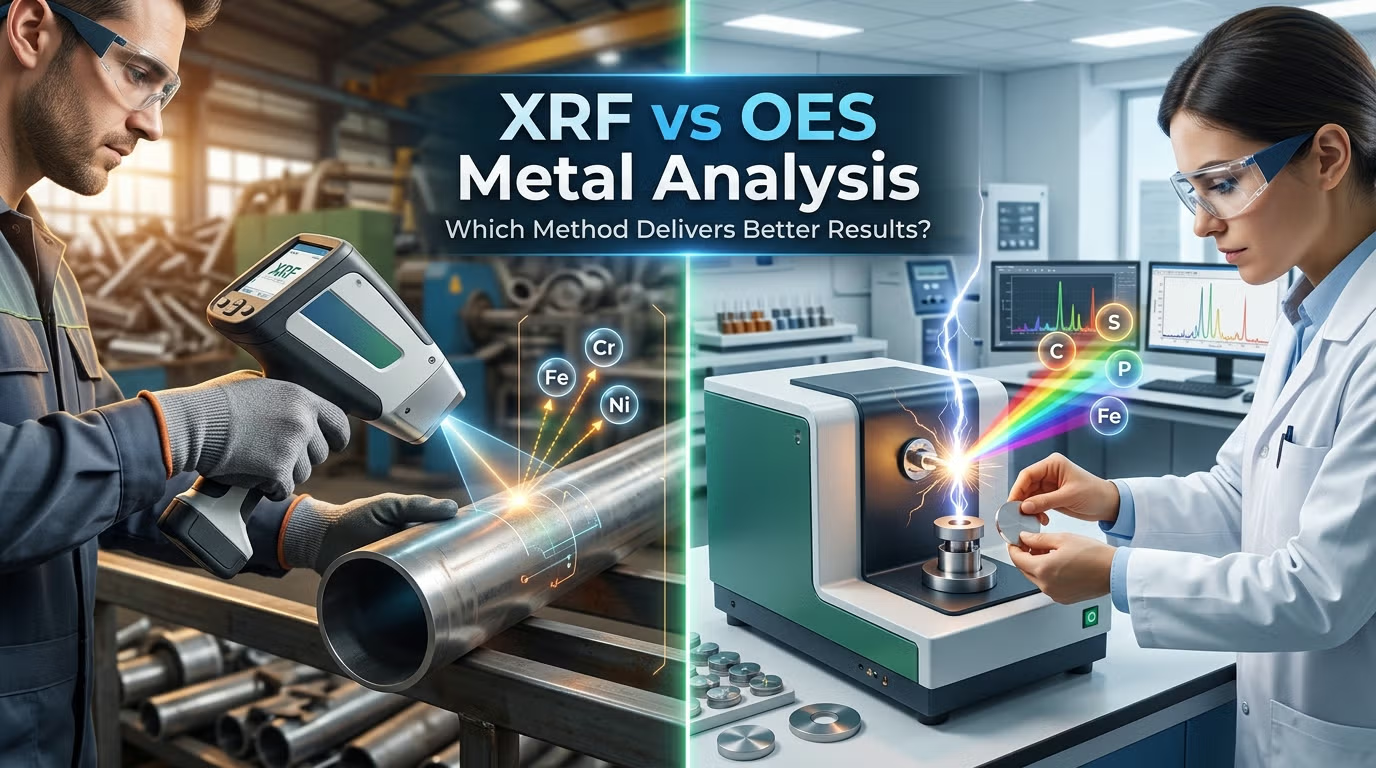
XRF uses X ray excitation to read an element's fluorescent "fingerprint." OES uses an electrical spark to vaporize a micro sample into plasma and reads the light it emits.
XRF is non destructive; OES leaves a small burn mark and requires a polished, flat sample surface.
OES is unmatched for light elements, including carbon, phosphorus, and sulfur, while XRF is stronger with mid to heavy elements.
XRF is lightweight and field portable (under 6.5 lbs); OES is lab based and needs an argon supply.
XRF typically costs less upfront and has lower running costs; OES demands a bigger investment in equipment, consumables, and trained operators.
Many labs use both: XRF for fast, non destructive screening, and OES for final certification and precise composition verification.
How Each Technology Actually Works
XRF: Reading Fluorescence from X Ray Excitation
An XRF analyzer fires a focused X ray beam at the surface of a sample. That energy knocks electrons out of their inner atomic shells, and as outer shell electrons drop in to fill the gap, they release energy in the form of secondary X rays, a process called fluorescence. Every element emits a distinct pattern of X ray energies, so the analyzer can identify which elements are present and, by measuring intensity, how much of each one exists in the sample.
OES: Generating Light Through a Spark Induced Plasma
OES takes a different route entirely. The instrument generates a high energy electrical spark between an electrode and the metal sample. That spark vaporizes a tiny amount of material into plasma, heating it to thousands of degrees. As the excited atoms in the plasma cool, they emit light at wavelengths specific to each element, typically somewhere between 130 and 800 nanometers. That light passes through diffraction gratings that separate it by wavelength, and detectors translate the pattern into an elemental readout.
Sample Impact: Non Destructive vs Micro Destructive Testing
This is one of the most practical differences between the two methods. XRF doesn't damage the sample at all, which makes it ideal for testing finished parts, valuable materials, or anything that needs to stay intact. Prep work is minimal, usually just a surface wipe down.
OES, by contrast, leaves a small permanent burn mark where the spark contacts the metal. It also requires the sample to be mechanically ground or sanded beforehand to expose a clean, flat surface, since skipping this step compromises accuracy.
Which Elements Each Method Detects Best
OES Leads on Light Elements
If your specification hinges on carbon, sulfur, phosphorus, or nitrogen, OES is generally the only field viable option that can measure them with real precision. This matters more than it might seem: the difference between standard 316 stainless and the more corrosion resistant 316L variant comes down to a carbon content difference of just 0.04%. OES can resolve differences like that, with detection limits reported as low as 0.01 mg/L for carbon and 0.13 mg/L for phosphorus.
XRF Leads on Mid to Heavy Elements
XRF performs best across a wide band of the periodic table, generally from sodium (atomic number 11) up through curium (96), and in advanced wavelength dispersive configurations, down to beryllium (4). It's particularly effective with heavier elements like lead and mercury, which produce a strong fluorescence signal. That makes XRF a go to choice for environmental screening, alloy sorting, and any application where heavier metals are the primary concern.
Trace Level Sensitivity
Both technologies handle trace detection well, but OES generally edges out XRF for ultratrace work, reaching down toward parts per million and even sub parts per million levels in demanding manufacturing environments. High end XRF units can also reach parts per million sensitivity and are more than adequate for most regulatory compliance screening, but they aren't typically built for the ultratrace, parts per billion, range.
Practical and Operational Differences
Sample Preparation
XRF is built for speed: test the material essentially as is, with little more than a quick surface clean. OES needs more attention, since samples require a properly ground, flat surface, commonly finished with zirconium aluminum oxide abrasive discs, to avoid inaccurate readings.
Portability
Handheld XRF analyzers weigh in at under 6.5 pounds, battery included, making them genuinely field ready for on site or hard to access testing. OES equipment is far bulkier, typically 45 to 60 pounds, plus a roughly 20 pound argon tank, putting it closer to "transportable" than truly portable, and often requiring mechanical assistance to move.
Speed
Both technologies deliver fast results. XRF typically returns a reading in 10 to 30 seconds, while OES can be nearly as quick, often around 20 seconds, giving OES a slight edge when split second decisions matter on a production line.
Maintenance and Consumables
XRF systems are relatively low maintenance and don't rely on consumables. OES systems need a steady argon supply, maintained above roughly 300 psi with leak free tubing, to accurately detect elements below 200 nm, along with more regular servicing overall.
Cost, Accuracy, and Choosing the Right Fit
Upfront and Ongoing Cost
XRF tends to be the more budget friendly option, both in initial purchase price and long term operating cost, thanks to minimal consumables and simpler maintenance. OES requires a larger capital investment and ongoing costs for argon, consumables, and skilled operators.
Accuracy by Application
XRF accuracy varies by material. It can reach 0.2 to 0.5% precision for something like gold in jewelry, but accuracy can swing by as much as 20% with certain mineral samples, and it performs better with heavier elements than lighter ones. OES is widely considered the laboratory standard for precision, especially where light element accuracy is critical.
Where Each Method Shines
XRF is the natural choice for rapid material identification, think scrap sorting, recycling, and alloy verification, such as distinguishing 304 from 316 stainless steel by detecting roughly 2% molybdenum content. OES is the better fit for manufacturing quality control, particularly anywhere carbon content needs to be verified against a tight specification.
Using Both Together
Many quality driven operations don't choose one over the other. They use both. A common workflow is fast, non destructive XRF screening to sort or pre qualify materials, followed by OES testing to certify final composition. This combination balances speed and cost against precision and certainty.
XRF vs OES at a Glance
| Characteristic | XRF (X Ray Fluorescence) | OES (Optical Emission Spectroscopy) |
|---|---|---|
| Operating principle | X ray beam excites atoms, producing fluorescence | Electrical spark generates plasma that emits light |
| Sample impact | Non destructive | Micro destructive (leaves a burn mark) |
| Light element detection | Weak below magnesium; cannot detect carbon | Excellent: carbon, phosphorus, sulfur |
| Effective detection range | Sodium (11) to curium (96) | 130 to 800 nm wavelength range |
| Sample prep | Minimal, surface cleaning only | Requires mechanical grinding and polishing |
| Portability | Highly portable (under 6.5 lbs) | Semi portable (45 to 60 lbs plus argon tank) |
| Analysis speed | 10 to 30 seconds | About 20 seconds |
| Maintenance | Low; no consumables | Requires argon gas and regular upkeep |
| Upfront cost | Lower | Higher |
| Accuracy | 0.2 to 0.5% for heavy elements; up to 20% variance on minerals | Superior precision, especially for light elements |
| Best applications | Scrap sorting, recycling, rapid ID | Manufacturing QC, carbon verification, lab analysis |
Why Sample Preparation Matters for OES Accuracy
Because OES results are only as good as the surface being tested, proper sample preparation is critical, especially when measuring light elements like carbon and sulfur, where even minor surface contamination or an uneven finish can skew results. Labs running high volumes of iron and steel samples typically rely on a dedicated dual disc surface grinder built specifically for spectroscopic sample prep, rather than a general purpose grinder. A machine designed for this purpose produces the flat, clean, contamination free surface that OES needs for the spark to make consistent contact with the material, directly protecting the reliability of every reading that follows.
Final Takeaway
There's no single "better" technology between XRF and OES. The right choice depends on what you're measuring and why. XRF wins on portability, speed of setup, non destructive testing, and lower cost, making it ideal for field screening, scrap sorting, and recycling. OES wins on precision for light elements like carbon, phosphorus, and sulfur, making it essential for manufacturing quality control and formal material certification.
Before choosing, weigh your priorities: how portable the equipment needs to be, your budget, which specific elements you need to detect, and whether the sample must remain undamaged. Many of the most rigorous testing operations don't pick one over the other. They combine fast XRF screening with OES verification to get both speed and certainty in their material quality control process.