Medical Device Manufacturing - Case Studies
Medical implants are currently in great demand, with manufacturers being asked for ever higher standards of surface finish and profile accuracy. Kemet International Ltd have spent many years developing, perfecting and automating precision surface finishing processes, specifically for the medical industry. From hip cups and femoral heads to tibial trays and glenospheres, our polishing and lapping systems are designed to deliver consistent, repeatable mirror finishes on orthopedic implants. All process development work for customers is carried out free-of-charge.
The Kemet Process Development Laboratories have been successful in developing special purpose polishing machines for a wide range of medical implants. Two of the most recent are the Kemet Ball Polishing Machine and the Kemet Tibial Polishing Cell. Below you will find case studies showing the before and after results achieved on real implant components.
Polishing Orthopedic Medical Implants - Hip Cups
The Kemet Ball Polishing Machine can polish cups and balls (heads) for hip joints to a mirror finish with a roundness accuracy of 3 microns. The simple 2 stage process is both reliable and repeatable. The machine can process all joint sizes and materials up to 100mm diameter. It can also easily be adapted for other round parts.
Hip joint bearing surfaces are among the most demanding in orthopedics. A smooth, geometrically accurate articulating surface helps to reduce friction and wear between the head and the cup, so controlling both surface roughness and sphericity is critical. Because the Kemet process is automated, results do not depend on operator skill, which means batch-to-batch consistency is far easier to achieve and document.
Test Requirements: To process unique style hip cups
Component/Material: Hip cups

Before Polishing Orthopedic Hip Cup
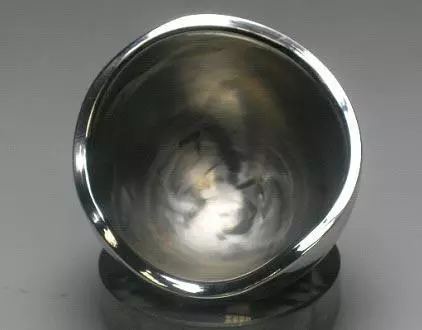
After Polishing Orthopedic Hip Cup

Key Benefits of Automated Hip Cup and Femoral Head Polishing
- Mirror finish with roundness accuracy of 3 microns
- Simple, repeatable 2 stage process
- Handles all joint sizes and materials up to 100mm diameter
- Easily adapted for other spherical and round components
- Reduced reliance on manual polishing skill
Polishing Tibials
The Kemet Tibial Polishing Cell has been specifically developed for finishing large production quantities of replacement knee parts, such as tibial trays. A typical cell contains Kemet smoothing, polishing and cleaning systems. It is able to finish component parts to a mirror polish whilst maintaining the precise profile needed.
Current buffing processes used by knee joint and hip joint manufacturers produce an uneven mirror polish. The Kemet polishing system produces a geometrically and technically perfect flat mirror polish.
The Kemet process has transformed the way tibials are polished worldwide. A Kemet 36 system will produce 400 parts per shift using only 2 operators. When we first entered this market each tibial was hand finished on a polishing mop. This limited the throughput, and had health and safety implications where operators were injured mainly due to repetitive strain injuries.
Test Requirements: To mirror polish a tibial using a Kemet CMP process.
Component/Material: Tibial pieces (Cobalt Chrome)
Before Polishing Tibial Implant
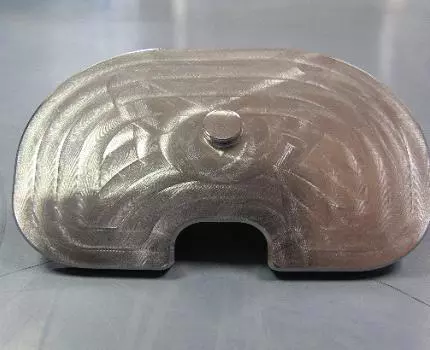
After Polishing Tibial Implant
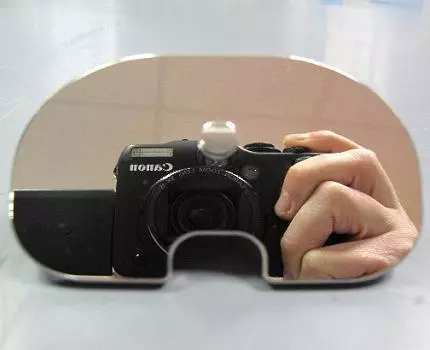
Why Move Away from Hand Buffing?
Manual buffing has long been used to finish knee implants, but it brings a number of drawbacks that automated polishing is designed to solve:
- Flatness and profile control: Buffing mops tend to round over edges and produce an uneven surface. Kemet CMP (chemical mechanical polishing) maintains the flat profile the component requires.
- Throughput: A Kemet 36 system produces 400 parts per shift with only 2 operators.
- Operator health and safety: Automating the process removes the repetitive strain injuries associated with hand finishing on a polishing mop.
- Repeatability: A controlled, documented process gives consistent results across large production runs.
Polishing Glenosphere
Glenospheres are used in reverse shoulder replacement, where the spherical articulating surface must be smooth and accurately formed. Using the Kemet ball lapping and polishing process, this component can be finished to a very fine surface quality in a controlled, repeatable way.
Test Requirements: To produce a surface finish better than 0.05Ra on medical components.
Component/Material: Glenospheres
Machine: Ball Lapping/Polishing Machine
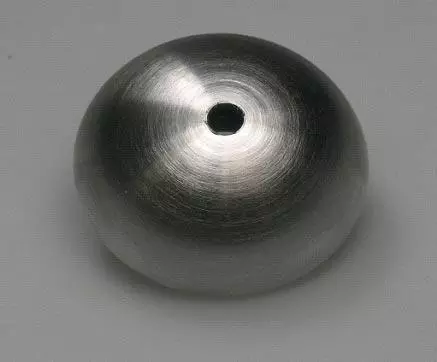
Before Polishing Glenosphere
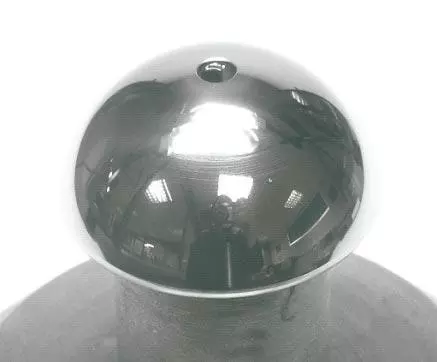
After Polishing Glenosphere
Understanding Surface Finish and Roundness in Medical Implants
Two measurements come up repeatedly in implant manufacturing. Surface roughness (Ra) describes how smooth a surface is at a microscopic level, and in the glenosphere example above the target was a finish better than 0.05Ra. Roundness describes how closely a spherical part matches a perfect circle, and the Kemet Ball Polishing Machine achieves 3 microns on hip cups and heads. Both matter because articulating implant surfaces need to move smoothly against each other for as long as possible.
Implant Components We Can Process
Our process development laboratories have experience with a wide range of orthopedic components, including:
- Hip cups (acetabular cups) and femoral heads (balls)
- Tibial trays and other knee replacement parts
- Glenospheres for shoulder replacement
- Other round, spherical or flat medical components on request
Materials worked on include cobalt chrome, and the processes can be adapted to suit other implant materials. Contact us with your component drawing and requirements to discuss what is possible.
Free Process Development for Medical Manufacturers
All process development work for customers is carried out free-of-charge at the Kemet Process Development Laboratories. Send us sample components and your target specification, and we will develop and prove a polishing or lapping process before you commit to a machine. You will receive before and after results so you can see exactly what the process achieves on your parts.
Frequently Asked Questions
What is the best way to polish orthopedic implants?
For high volume production, automated polishing is generally preferred over manual buffing because it produces a more consistent, geometrically accurate finish, increases throughput and removes the health and safety risks of hand finishing.
What roundness can be achieved when polishing hip cups and heads?
The Kemet Ball Polishing Machine polishes cups and balls for hip joints to a mirror finish with a roundness accuracy of 3 microns, on joints up to 100mm diameter.
Can Kemet polish tibial trays?
Yes. The Kemet Tibial Polishing Cell is designed for large production quantities of tibial trays and other replacement knee parts, delivering a flat mirror polish while holding the required profile. A Kemet 36 system will produce 400 parts per shift using 2 operators.
What surface finish can be achieved on glenospheres?
In our glenosphere trial, the target was a surface finish better than 0.05Ra, produced using the Kemet Ball Lapping/Polishing Machine.
Is there a charge for process development?
No. All process development work for customers is carried out free-of-charge.
Talk to Our Medical Polishing Specialists
Whether you manufacture hip, knee or shoulder implants, our team can help you achieve the surface finish and profile accuracy your components demand. Learn more about our ball polishing machines, our precision lapping machines or our lapping services, or contact us to arrange a free process development trial.