Vacuum Degreasing System for Remanufacturing Applications
The Remanufacturing Challenge
Remanufactured products present unique cleaning challenges that conventional cleaning systems struggle to address effectively. These components often arrive with heavy organic contamination including oils, greases, and carbon or varnish deposits, along with inorganic residues such as salts, oxides, and corrosion buildup. The unpredictable condition and extreme soil loads of incoming remanufactured parts create significant operational difficulties for manufacturing facilities.
In conventional aqueous cleaning systems, cleaning tanks are quickly overwhelmed by the heavy soil load carried by remanufactured components. This contamination forces frequent bath changes, resulting in increased downtime, higher operating costs, and inconsistent cleaning results that can compromise quality control standards. The variability in incoming part condition makes it nearly impossible to maintain stable cleaning performance across production runs, leading to rejected parts, rework, and production delays.
The hybrid approach fundamentally solves these challenges by enclosing the washing process in a sealed chamber and removing bulk contaminants through a sophisticated closed-loop solvent distillation and filtration system. This innovative approach ensures that cleaning performance remains consistent regardless of how heavily soiled the incoming remanufactured parts may be, while dramatically reducing maintenance requirements and operating costs.
Why the KP.HYBRID Vacuum Degreasing Excels in Remanufacturing Applications
The KP.HYBRID series machines represent a breakthrough in industrial parts cleaning technology, specifically engineered to handle the demanding requirements of remanufacturing operations. These advanced systems perform immersion cleaning under vacuum conditions with programmable load motion and optional ultrasonics for enhanced cleaning power. Both vapour treatment and vacuum drying occur in the same chamber, eliminating the need for manual part transfers and reducing handling time.
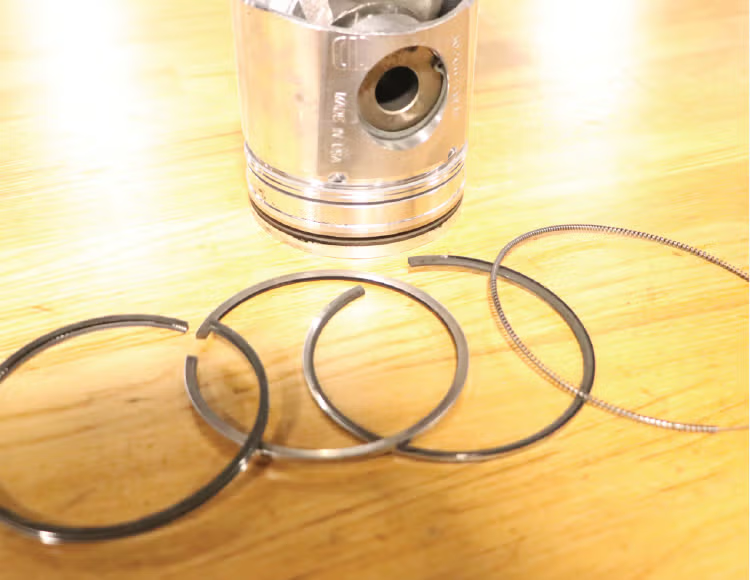
Operating under vacuum conditions provides significant advantages over atmospheric cleaning systems. The vacuum environment improves wetting characteristics and enhances soil evacuation in challenging areas such as piston ring grooves, oil galleries, coolant passages, and blind holes where contaminants typically accumulate. The vacuum drying process that follows the cleaning cycle ensures that parts exit the machine completely dry and immediately ready for downstream operations including inspection, assembly, or coating processes, with no waiting time for air drying or manual drying steps.
The Hybrid Approach
The KP.HYBRID system combines the best attributes of solvent-based and aqueous cleaning technologies into a single, integrated process. This hybrid methodology delivers superior cleaning performance by leveraging modified alcohol solvents for organic contamination removal and aqueous detergent treatment for stubborn carbon deposits and inorganic residues. The sequential application of both cleaning chemistries in a controlled environment ensures complete contamination removal without the limitations of single-chemistry systems.
Technical Effects
- Access to tight features: Modified alcohols exhibit low surface tension properties that, when combined with vacuum conditions and programmable part motion, enable reliable soil release in piston ring grooves, oil galleries, cross-drilled passages, and other capillary features where conventional cleaners fail to penetrate effectively.
- Reliable dryness: The vacuum drying process actively removes residual liquids from complex geometries, internal passages, and blind holes. Parts exit the machine completely dry and spot-free, eliminating the risk of water spots, corrosion, or contamination from trapped cleaning fluids that can occur with atmospheric drying methods.
- Stable results across multiple washes: The integrated distillation and filtration system continuously maintains solvent quality throughout production runs, ensuring consistent cleaning outcomes even when heavily soiled remanufactured products arrive with extreme contamination levels. This eliminates the performance degradation typical of batch cleaning systems.
The Differentiator: Self-Regenerating Tanks
The defining advantage of this system lies in its self-regenerating solvent management technology. Where aqueous cleaners rapidly lose effectiveness as soil loads accumulate, the system continuously maintains solvent quality inside the machine without operator intervention or production interruptions.
The continuous distillation process separates contaminated solvent by heating it to vapourise clean solvent while leaving behind oils, greases, and other contaminants. The solvent vapour is then condensed back into clean liquid and automatically recirculated through the machine's three-tank system, ensuring consistent cleaning power throughout extended production runs. Simultaneously, advanced filtration and oil separation systems remove fine particles and oils from the cleaning solution without requiring manual intervention.
This self-regenerating capability is absolutely critical for remanufacturing operations where incoming part condition varies widely from batch to batch. It eliminates unplanned tank swaps that disrupt production schedules, reduces the risk of cleaning failures from degraded chemistry, and ensures that cleaning performance on the last part of the day matches the first part of the morning shift.
Operational Effects
- Reduced maintenance hours and downtime: The closed-loop solvent regeneration system drastically reduces maintenance requirements and eliminates the frequent tank changeovers that plague conventional cleaning systems. Production time is maximised, and maintenance staff can focus on value-added activities rather than routine fluid changes.
- Lower solvent consumption and waste generation: Oils, grease, metal chips, carbon deposits, and other soils are separated and removed within the machine rather than contaminating the entire fluid bath. This extends the operational life of your cleaning chemistry significantly and reduces the frequency of waste removal, lowering both chemical costs and environmental disposal expenses.
- Process consistency across shifts: The sealed, programmable machine operation eliminates operator-dependant variation that affects cleaning quality in manual systems. There are no manual transfers from tank to tank, no judgement calls about dwell times, and the same validated process runs consistently across different operators and shifts, ensuring predictable quality outcomes.
Washing Process for a Remanufactured Piston
The KP.HYBRID system employs a comprehensive six-step cleaning cycle designed specifically for heavily contaminated remanufactured components:
- Step 1: Solvent spray and immersion to remove initial oil and grease soil loads and break down surface contamination layers.
- Step 2: Aqueous treatment (HYBRID) using detergent chemistry to eliminate stubborn carbon buildup and inorganic contaminants that resist solvent cleaning alone.
- Step 3: Water rinse to thoroughly remove detergent residues and suspended soils from all surfaces and internal passages.
- Step 4: Full solvent submersion for final rinse and surface preparation, displacing water and ensuring complete cleanliness.
- Step 5: Solvent vapour treatment in preparation for the drying phase, providing additional cleaning action and surface conditioning.
- Step 6: Vacuum drying to achieve fully dry, spot-free final components ready for immediate downstream processing.
Note: Throughout this process, contaminated solvent is continuously heated to separate oil from solvent vapour, which is then condensed back into clean liquid and automatically recirculated through the machine's three-tank system, maintaining optimal cleaning performance without interruption.
The Results: Proven Performance
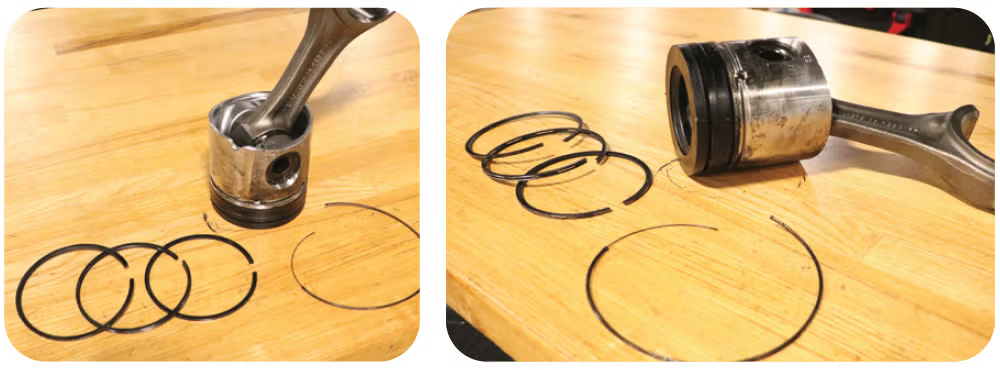
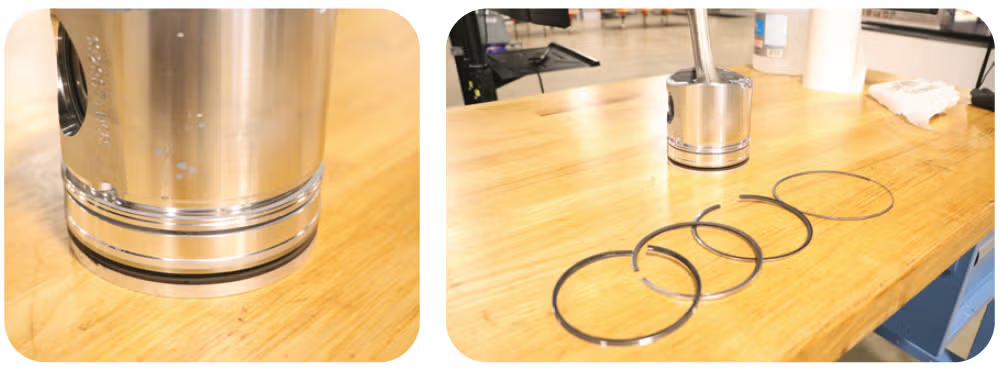
Heavily soiled remanufactured pistons with extensive oils, grease accumulation, and heavy carbon buildup were successfully cleaned using the KP.HYBRID system, which combines modified alcohol and aqueous-based treatment in a closed-loop distillation process.
Before Treatment: Heavily soiled remanufactured pistons before the KP.HYBRID wash.
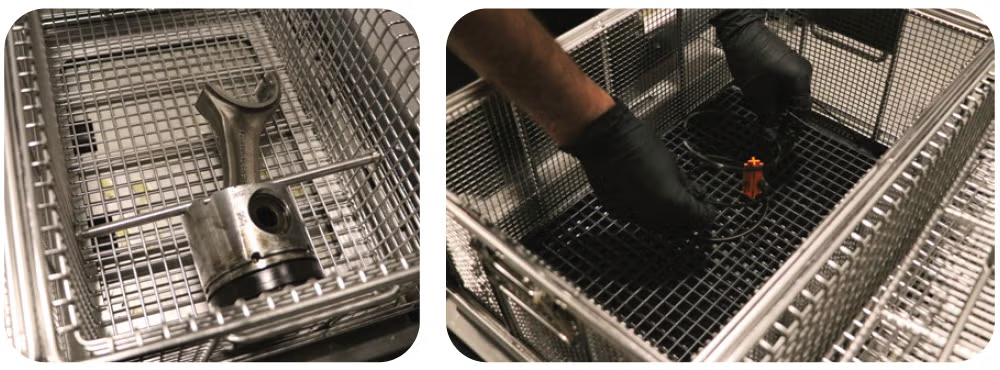
Preparation: Piston and rings being secured for wash in the KP.HYBRID basket.
After Treatment: Fully clean, dry parts after one KP.HYBRID wash cycle.
What This Means For Your Business
Implementing the KP.HYBRID system delivers measurable business benefits that directly impact your bottom line and operational efficiency:
- Predictable Quality Outcomes: Consistent cleaning results across all shifts and operators eliminate quality escapes and reduce scrap rates, protecting your reputation and customer relationships.
- Reduced Operating Costs: Lower chemical consumption, reduced waste disposal expenses, and minimal maintenance requirements deliver significant cost savings compared to conventional cleaning systems.
- Increased Production Capacity: Elimination of unplanned downtime for tank changes and reduced cycle times from the automated process increase throughput without additional capital investment.
- Improved Worker Safety: The sealed-chamber design minimises worker exposure to cleaning chemicals and eliminates the manual handling associated with tank-to-tank transfer operations.
- Environmental Compliance: Reduced chemical consumption and waste generation simplify environmental compliance and may reduce regulatory reporting requirements.
- Scalable Process: The programmable, automated operation makes it easy to replicate cleaning processes across multiple machines or facilities, supporting business growth.
For remanufacturing facilities struggling with inconsistent cleaning results, excessive downtime, and high operating costs from conventional cleaning systems, the KP.HYBRID represents a proven solution that addresses the root causes of these challenges. The combination of hybrid cleaning chemistry, vacuum processing, and self-regenerating solvent management creates a cleaning system specifically engineered for the demanding requirements of remanufactured component processing.
Frequently Asked Questions About Vacuum Degreasing
What is Vacuum Degreasing?
Vacuum degreasing is an advanced cleaning process that removes oils, greases, and other contaminants from parts in a sealed chamber under vacuum conditions. Unlike conventional atmospheric cleaning, the reduced pressure environment enhances solvent penetration into tight spaces, improves wetting of complex surfaces, and enables more thorough contaminant removal from blind holes, threads, and internal passages. The vacuum also facilitates rapid, complete drying of cleaned parts without heat damage or residue.
How does Vacuum Degreasing differ from traditional parts cleaning?
Traditional parts cleaning typically occurs at atmospheric pressure using either aqueous detergents or solvents in open or semi-open tanks. Vacuum degreasing operates in a sealed chamber under reduced pressure, which provides several key advantages: better penetration into complex geometries, faster and more complete drying, reduced solvent consumption, and elimination of manual part transfers between cleaning and drying stages. The vacuum environment also lowers the boiling point of cleaning solvents, allowing effective cleaning at lower temperatures that won't damage sensitive components.
What types of contaminants can Vacuum Degreasing remove?
Vacuum degreasing effectively removes a wide range of contaminants including cutting oils, lubricating greases, hydraulic fluids, stamping oils, drawing compounds, machining chips, carbon deposits, varnish buildup, and light oxidation. The KP.HYBRID system's combination of solvent and aqueous cleaning stages makes it particularly effective against both organic contaminants (oils and greases) and inorganic residues (salts, oxides, and mineral deposits) that often coexist on remanufactured parts.
Why is vacuum important for drying parts?
Vacuum drying is significantly more effective than air drying or heat drying at atmospheric pressure. Under vacuum conditions, liquids evapourate at much lower temperatures, which protects heat-sensitive components while achieving complete dryness. The vacuum actively pulls moisture from blind holes, threaded cavities, and complex internal passages where air drying would leave trapped liquids. Parts exit the vacuum degreasing system completely dry and spot-free, immediately ready for inspection, assembly, or coating operations without any waiting period.
Is Vacuum Degreasing environmentally friendly?
Yes, vacuum degreasing systems like the KP.HYBRID are considerably more environmentally friendly than traditional cleaning methods. The sealed-chamber design prevents solvent emissions to the atmosphere, while the closed-loop distillation and filtration system dramatically reduces chemical consumption and waste generation. Contaminants are separated and concentrated for disposal rather than contaminating large volumes of cleaning fluid. This results in lower solvent usage, reduced waste disposal costs, and minimal environmental impact compared to conventional open-tank cleaning systems.
What industries benefit most from Vacuum Degreasing?
Vacuum degreasing is ideal for automotive remanufacturing, aerospace component refurbishment, hydraulic and pneumatic component rebuilding, precision machining operations, medical device manufacturing, electronics assembly, and any application requiring critical cleanliness standards. Industries dealing with heavily contaminated parts, complex geometries, or strict cleanliness specifications find vacuum degreasing particularly valuable due to its consistent performance and thorough contamination removal.
How does the self-regenerating solvent system work?
The self-regenerating system continuously cleans the solvent through distillation while parts are being washed. Contaminated solvent is heated to vapourise the clean solvent while leaving behind oils, greases, and particulates. The solvent vapour is condensed back into clean liquid and automatically returned to the cleaning tanks. Simultaneously, filtration removes fine particles and oil separation systems extract lubricants and oils. This continuous regeneration maintains consistent solvent quality indefinitely without manual intervention or production interruptions for tank changes.
Can Vacuum Degreasing handle different part sizes and shapes?
Yes, vacuum degreasing systems are highly versatile and can accommodate a wide range of part sizes, shapes, and configurations. The programmable basket motion can be adjusted for different part types, and custom fixtures can be designed to hold irregular or delicate components securely during the cleaning cycle. From small precision components to large castings, and from simple flat parts to complex assemblies with internal passages, vacuum degreasing provides effective cleaning across diverse applications.
What maintenance does a Vacuum Degreasing system require?
Vacuum degreasing systems require minimal maintenance compared to conventional cleaning equipment. The self-regenerating solvent system eliminates frequent fluid changes, and the closed-loop design reduces wear on pumps and components. Routine maintenance typically includes periodic inspection of seals and gaskets, checking vacuum pump oil levels, emptying the waste oil separator, and replacing filters according to the maintenance schedule. The reduction in maintenance requirements is one of the key operational benefits that lowers total cost of ownership.
How long does a typical Vacuum Degreasing cycle take?
Cycle times vary depending on the part complexity, soil load, and specific cleaning requirements, but typical vacuum degreasing cycles range from 15 to 45 minutes for complete cleaning and drying. The KP.HYBRID system's six-step process for heavily soiled remanufactured parts may take longer, but delivers fully clean, completely dry parts in a single automated cycle without any manual intervention or secondary processing. The elimination of manual handling and drying time often results in faster overall throughput compared to multi-stage conventional cleaning systems.