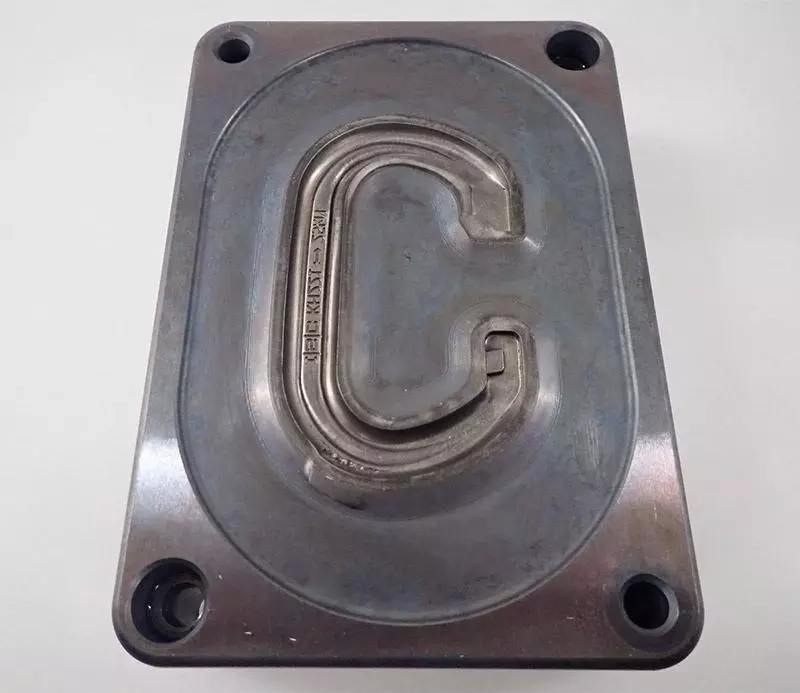
Removing Forging Residue from Steel Forging Dies Using Ultrasonic Cleaning
Forging dies manufactured from H13 tool steel are subjected to extreme operating conditions during the forging process, accumulating stubborn forging residues that adhere tenaciously to complex die geometries including recessed cavities and internal holes. These residues, if left untreated, can compromise the dimensional accuracy of subsequent forging operations and accelerate die wear. Conventional cleaning methods such as manual scrubbing or pressure washing often prove insufficient for removing compacted forging deposits from intricate die surfaces without risking surface damage. Ultrasonic cleaning technology, combined with a specialist alkaline detergent formulated for ferrous and tool steel alloys, provides a highly effective solution for restoring contaminated forging dies to a clean, production-ready condition. This trial documents a three-stage ultrasonic cleaning process applied to an H13 tool steel forging die, demonstrating progressive contamination removal over an extended cleaning cycle.
Materials and Equipment
- Components: Forging Die
- Material: H13 tool steel
- Contaminants: Forging residue
- Cleaning Agents: H14 alkaline ultrasonic cleaning detergent
- Ultrasonic Cleaning Machines: M80I 30 kHz ultrasonic cleaner
H14 is a concentrated alkaline cleaning detergent specifically formulated for use with ultrasonic cleaning equipment on ferrous and specialist alloy components. It has been developed to remove challenging deposits including forging residues, varnishes, resists, lacquers and paints from cast iron, stainless steel, martensitic and austenitic stainless steels, refractory alloys, magnesium, titanium and its alloys. H14 is composed of a blend of high-performing surfactants in a moderately alkaline liquid base, engineered to deliver outstanding degreasing performance under ultrasonic agitation whilst leaving no residual film after rinsing. It also functions as a powerful deoxidiser for the same range of metals. Note that H14 is not suitable for use on aluminium components.
Cleaning Process
The cleaning process comprised three stages: ultrasonic washing with H14, manual water rinsing, and compressed air drying. The M80I ultrasonic cleaner was operated at 30 kHz with H14 at 10% concentration and 70°C. Prior to cleaning, the tank was filled, allowed to fully degas, and brought up to the required operating temperature to ensure maximum ultrasonic cleaning efficiency throughout the cycle.
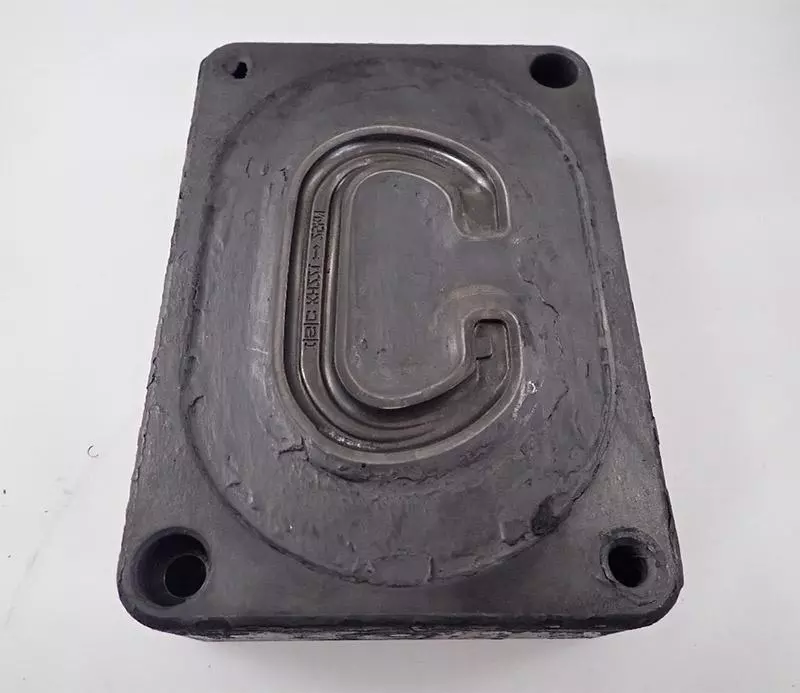
Stage 1 - Ultrasonic Wash with H14: The M80I tank was filled with tap water and diluted to a 10% concentration of H14 cleaning detergent. The solution was allowed to degas and reach 70°C before the forging die was introduced. The die underwent a 90 minute ultrasonic cleaning cycle, with visible contamination removal evident as early as 10 minutes into the process. The extended cycle time allowed the ultrasonic cavitation and alkaline chemistry to progressively penetrate and lift the compacted forging residue from all surfaces, including recessed areas and internal holes.
Stage 2 - Tap Water Rinse: Following the ultrasonic cleaning cycle, the die was transferred to an empty tank and rinsed thoroughly using a hose. As a single component was being processed, manual rinsing provided the most practical and efficient approach. In a production environment with multiple components, a dedicated rinse tank would typically be employed to ensure consistent and thorough rinsing across all parts.
Stage 3 - Drying: The die was dried using a compressed airline. The residual heat retained within the die from the 70°C cleaning cycle significantly accelerated the drying process. The airline was also used to flush internal holes and recesses, ensuring all moisture was expelled from the die geometry before the component was packed and returned to service.
Results
The ultrasonic cleaning trial successfully removed forging residue contamination from the H13 tool steel forging die. Progressive improvement was clearly visible throughout the cleaning cycle, with significant contamination removal evident after just 10 minutes and complete cleaning achieved by the end of the 90 minute cycle. The H14 alkaline detergent performed effectively at 10% concentration and 70°C, demonstrating its suitability for removing tenacious forging deposits from tool steel components without causing surface damage. The three-stage process of ultrasonic washing, water rinsing and compressed air drying provided a thorough and practical cleaning solution, restoring the die to a clean condition ready for inspection and return to production.
Before Removing Forging residue
After 10 minutes of process
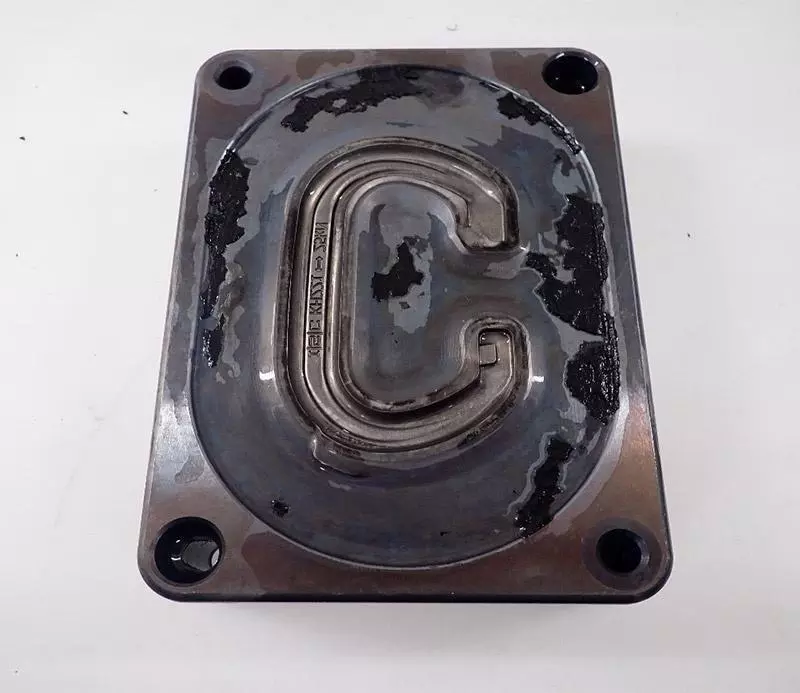
After Cleaning Tool Steel Die