Cleaning Transfer Moulds
Transfer moulding tooling requires specialised cleaning protocols to remove thermally degraded residues whilst protecting delicate plated surfaces from chemical attack or mechanical damage. When nickel plated mild steel tooling becomes contaminated with thermally degraded silicon mould release agents, the residues create a persistent layer that attracts and traps additional dirt, progressively degrading tool performance and mould quality. The fundamental challenge lies in selecting appropriate cleaning agents that possess sufficient strength to break down and remove stubborn, baked-on silicone residues without compromising the integrity of the nickel plating. Traditional alkaline cleaners, whilst highly effective for most mould tooling applications, cannot be used on nickel-plated surfaces due to their aggressive nature. This necessitates a comprehensive evaluation of alternative detergent formulations that balance cleaning power with material compatibility. Three distinct detergent chemistries were tested using ultrasonic cleaning technology to identify the optimal solution for this demanding application.
Materials and Equipment
- Components: Transfer moulding tooling
- Material: Nickel plated mild steel tooling
- Contaminants: Thermally degraded silicon mould release agent causing dirt to stick
- Cleaning Agents: Solvit 4 (acidic detergent), Type I (stronger acid detergent), and Galvex 20.02 (slightly alkaline universal detergent)
- Ultrasonic Cleaning Machines: K-Sonic 30 Benchtop ultrasonic cleaner, Versa Genius+ 120 ultrasonic tank, Versa Genius+ 120 rinse tank, and Versa Genius+ 120 hot air dryer
Typically, strong alkaline products are used for mould tooling cleaning. However, the nickel-plated surface of these tools necessitated testing alternative detergent formulations to prevent damage to the plating. Three different detergents were evaluated during the trials.
Cleaning Agents Tested
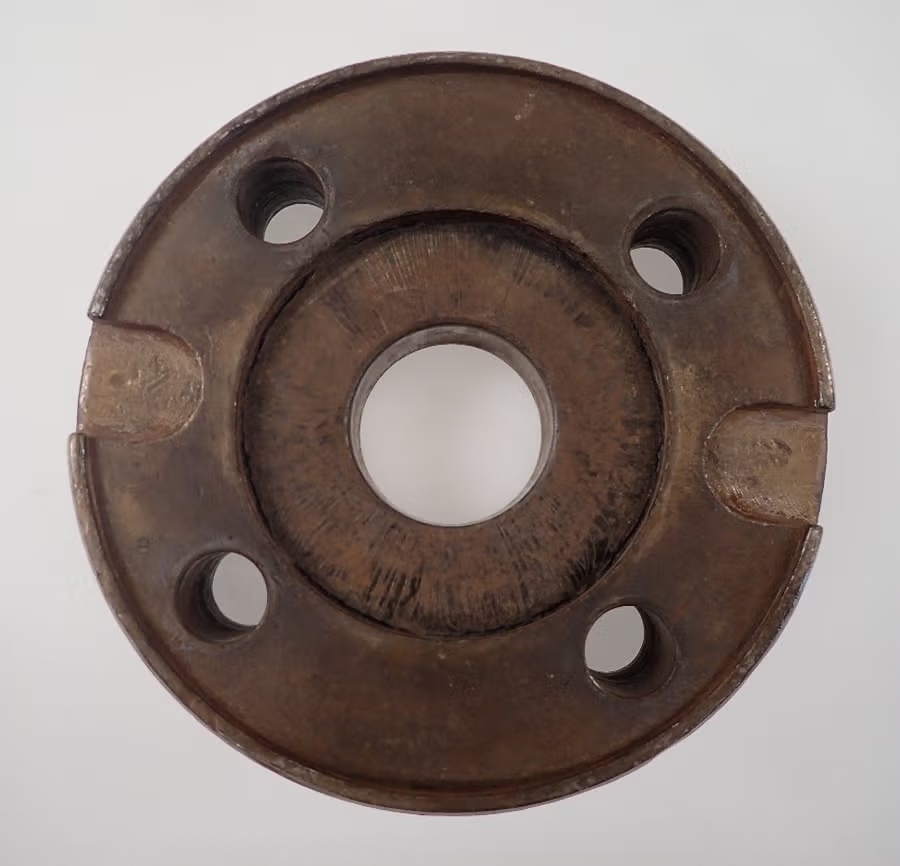
Solvit 4: An acidic-based detergent suitable for cleaning nickel, nickel silver, copper, brass, steel, stainless steel, and ceramics. It ensures perfect degreasing due to its excellent emulsifying power. This agent was used at 5% concentration at 60°C to clean Tool A.
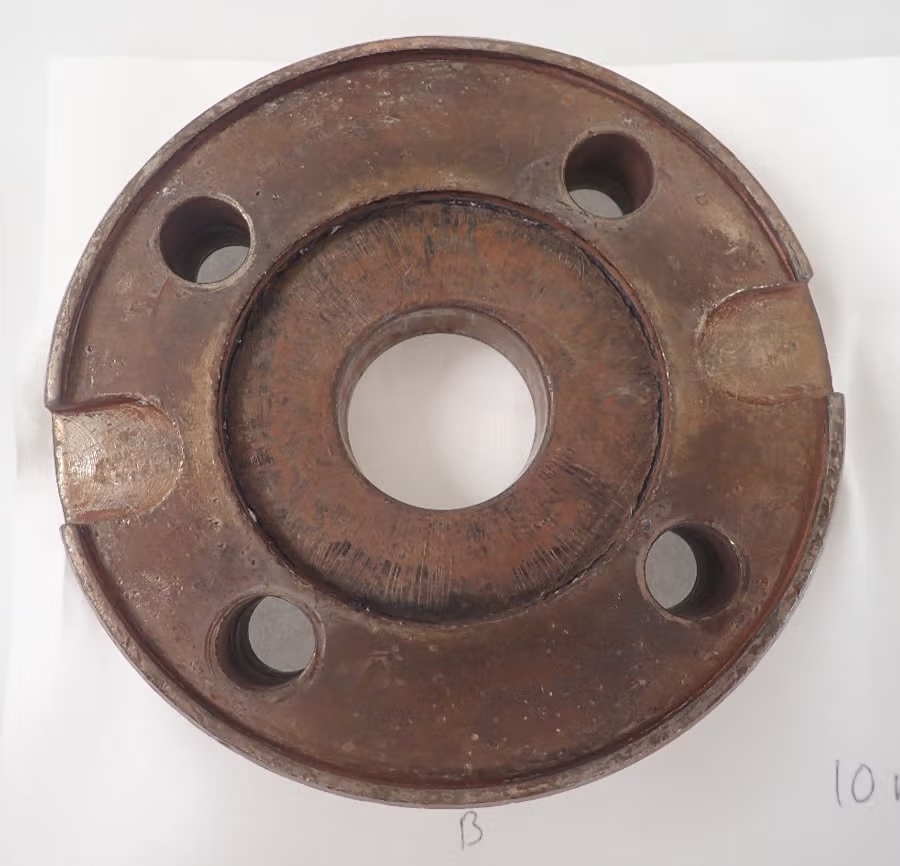
Type I: A slightly stronger acid specially formulated for degreasing with ultrasonics. Its penetrating power confers outstanding cleaning qualities, making it effective for stubborn contamination. This agent was used at 10% concentration at 60°C to clean Tool B.
Galvex 20.02: A slightly alkaline universal detergent formulated for the removal of polishing pastes, soluble oil, and light pollution in ultrasonic processes. It is compatible with all materials, providing versatility without compromising surface integrity. This agent was used at 5% concentration at 60°C to clean Tools C and D.
Cleaning Process
All tools underwent a standardised three-stage cleaning process to ensure consistent evaluation across the different detergent formulations. Each stage was carefully controlled for temperature, concentration, and duration to optimise cleaning performance whilst protecting the nickel plating.
Stage 1 - Ultrasonic Cleaning: Components were placed in the appropriate ultrasonic cleaner with the designated cleaning agent. The ultrasonic cleaning cycle ran for 10 minutes at 60°C with the specified detergent concentration. This stage utilised cavitation to break down and lift thermally degraded silicon residues from the tool surfaces.
Stage 2 - Rinsing: Following ultrasonic cleaning, tools were transferred to the Versa Genius+ 120 rinse tank containing tap water at 20°C. A 2-minute rinse cycle with air bubble agitation and auto-purge thoroughly removed detergent residues and loosened contamination from all surfaces.
Stage 3 - Hot Air Drying: Components underwent a 10-minute drying cycle in the Versa Genius+ 120 hot air dryer at 70°C. This ensured complete moisture removal and prepared the tools for immediate inspection and vacuum packing.
Results and Evaluation
Due to the worn and plated nature of the tooling, visual inspection alone proved insufficient to assess cleaning effectiveness. A standardised post-cleaning test was implemented where each dried tool was wiped with a pure white dry lint-free clean room wipe to reveal any remaining contamination through residue transfer.
Tools A and B, cleaned with Solvit 4 and Type I respectively, still exhibited surface contamination with visible residue appearing on the wipes after cleaning. The acidic formulations, whilst compatible with nickel plating, demonstrated limited effectiveness against the thermally degraded silicon contamination.
Tools C and D, cleaned with Galvex 20.02, showed significantly improved results with only very small amounts of residue visible on the wipes. The slightly alkaline universal detergent proved most effective at removing the stubborn mould release agent whilst remaining safe for the nickel-plated surfaces. All tools were vacuum-packed and returned to the customer for final inspection and approval.
Before and After